
What is Zigbee RF4CE
Advertisement
Zigbee RF4CE (Radio Frequency for Consumer Electronics) is a lightweight wireless communication standard optimized for remote control applications. Designed for low power consumption and reliable operation, Zigbee RF4CE enables wireless control of televisions, set top boxes, audio systems and other consumer electronic devices.
The RF4CE consortium was formed in 2009. This consortium and the Zigbee Alliance teamed up to create a standard for radio frequency remote controls. The goal was to control various consumer devices like TVs, audio systems, and set-top boxes using RF technology.
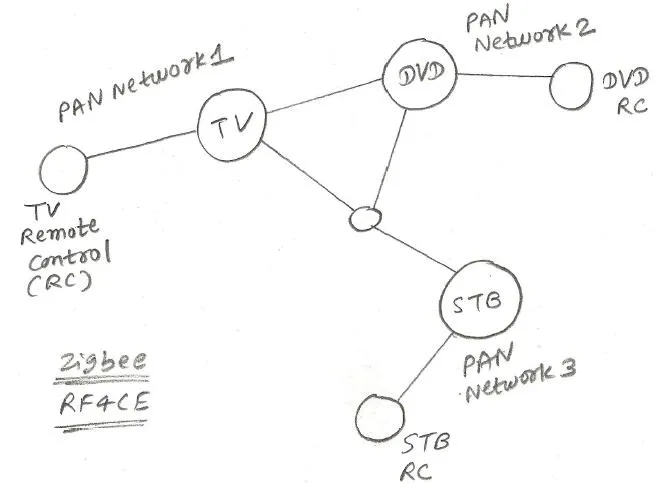
Fig.1, Typical Zigbee based RF4CE network
Zigbee RF4CE protocol stack utilizes 2.4GHz transceiver compliant to 802.15.4 for remote control devices and their targets (audio and video devices). The second RF4CE application profile was introduced in 2012, compliant with the Zigbee standard.
Figure 1 illustrates the modules inside a Zigbee RF4CE remote controller device used to control a TV/LCD. It also shows how a remote control can manage a DVD player and Set-Top Box (STB).
Zigbee RF4CE Frame Structure
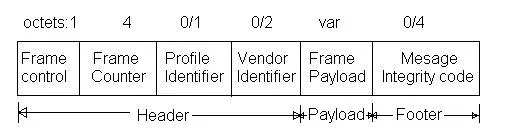
Fig.2 Zigbee Frame
The Zigbee frame is composed of a header, payload, and footer. The header includes frame control, frame counter, profile identifier, and vendor identifier. The footer carries the message integrity code, ensuring the data hasn’t been tampered with.
Key Features of Zigbee RF4CE
Here are some of the features that make Zigbee RF4CE tick:
- Operates at 2.4GHz frequency using three channels.
- Compliant with IEEE 802.15.4 standard.
- Designed with power saving in mind.
- Supports a multi-star topology with Inter-PAN communication.
- Employs AES-128 security standard for secure communication.
- Features a simple RC control profile.
- Offers various transmission options: broadcast, unicast, acknowledged, unacknowledged, secured, and unsecured.
- Supports a pairing mechanism for easy device association.
Zigbee: A Quick Overview
-
Zigbee networks are designed for low power, low data rate applications. They’re often used in home automation, industrial control and other similar scenarios.
-
The Zigbee protocol stack defines how devices communicate within a Zigbee network. It includes the physical layer (PHY), media access control layer (MAC), network layer, and application layer.
-
The physical layer defines the radio frequencies, modulation techniques, and data rates used for wireless communication.
-
Zigbee frames are structured with a header, payload, and footer.
-
Zigbee MAC layer handles channel access, addressing and frame formatting.
-
Zigbee operates in various frequency bands, including 2.4 GHz, 915 MHz and 868 MHz.
-
Zigbee devices must conform to certain standards to ensure interoperability between different manufacturers.
-
Zigbee AODV (Ad-hoc On-demand Distance Vector) is a routing protocol used in Zigbee networks to discover and maintain routes between devices.
-
One can find Zigbee technology in a wide range of products, including smart lights, thermostats, sensors and remote controls.
Continue Learning Zigbee Technology
- Zigbee Basics Tutorial
- Zigbee Mesh Network Architecture
- Zigbee Protocol Stack
- Zigbee Physical Layer Modules
- Zigbee Physical Layer Frame Format (PPDU)
- Zigbee MAC Layer & its Frame Types
- Zigbee Frequency Bands and Data Rates
- Zigbee AODV Routing Protocol
- Zigbee 3.0 Protocol & key features
- What is Zigbee 6LoWPAN
General Electronics & Power Electronics
- Essential Electronic Terminology
- Power Electronics FAQs
- FET Applications in Electronics
- Consumer Electronics Sensors
- Printed Electronics: Advantages & Disadvantages
- Encoders and Decoders in Digital Electronics
- Advantages and Disadvantages of Electronic Counters
- Electronic Nose Technology
- Electronic Paper Display: Advantages & Disadvantages
- Electronic Pills: Advantages & Disadvantages
- Electronic Shelf Label Display: Advantages & Disadvantages