
Xbox One vs. Xbox 360: Key Differences and Comparison
Advertisement
This article compares the Xbox One and Xbox 360, highlighting their differences to help you make an informed purchase decision and understand the features of each console. The Xbox One is the successor to the Xbox 360, boasting improved features and capabilities.
Let’s delve into a comparison of the Xbox One and Xbox 360, examining their front panels, back panels, and other key parameters like size, performance, and pricing.
Xbox One Features
Released on November 22, 2013, the Xbox One offers the following features:
Front Panel
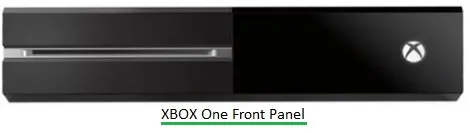
- Eject Button
- Power Button
- No USB Ports on the front panel
Back Panel
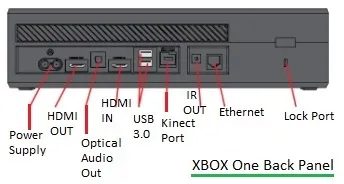
- HDMI IN, HDMI OUT
- 2 USB Ports
- Kinect Port
- Ethernet Port
- Power Port
Notably, the Xbox One features one USB port and an eject button on its side panel.
Xbox 360 Features
Launched on December 10, 2005, the Xbox 360 includes these features:
Front Panel
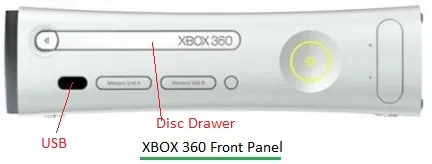
- Eject Button
- Power Button
- 2 USB Ports
Back Panel
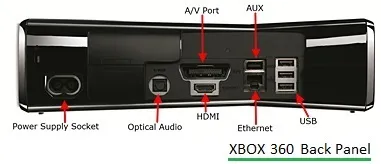
- 3 USB Ports
- Power Supply Socket
- Optical Audio
- HDMI
- A/V Port
- Ethernet Port
- AUX Port
Xbox One vs. Xbox 360: A Detailed Comparison
Based on the front and back panel layouts, along with other specifications, here’s a table summarizing the key differences between the Xbox One and Xbox 360:
| Specifications | Xbox One | Xbox 360 |
|---|---|---|
| Size | Larger | Smaller |
| USB Ports | 3 | 5 |
| Processor | 8 core, x86 AMD with 1.75 GHz speed | 3 core PowerPC Xenon with 3.2 GHz speed |
| RAM | 8 GBytes | 512 Mbytes |
| Storage | 500 GB or 1 TB Hard Disk | 4GB or 250GB HD |
| Performance | More efficient due to more cores. | Less efficient due to fewer cores. |
| Graphics | Smoother and more realistic. | Less better. |
| Number of Games | Fewer games; Xbox 360 games are becoming available. | More games due to earlier launch. |
| Number of controllers | Up to eight | Up to 4 wireless/wired |
| WiFi connectivity | Available | Available as an add-on, standard in S-model. |
| Kinect Support | YES | NO |
| Dimension | 33.3cm wide, 27.4cm deep, 7.9cm tall | 27cm wide, 26cm deep, 7.5cm tall |
| Overheating problem | No, due to spacious size | Yes, due to less space in design |
| Noise problem | Less noisy due to enough space | More noisy |
| Life cycle | Approx. 10 years | Approx. 6 to 8 years |
| Pricing | $499 with Kinect | $299 with Kinect and 4GB console |
Continue Learning ATSC TV Technology
- ATSC 1.0 vs ATSC 2.0 vs ATSC 3.0: TV Standards Comparison
- ATSC 3.0: Features, Protocol, Physical Layer & Frame Structure
Continue Learning Television (TV) Technology
- Digital TV (DTV) System Basics: Transmitter & Receiver
- TV Channel Frequencies
- TV Signal Spectrum
- Cable TV System Basics
- Cable TV Channel Frequencies
- IPTV : Key Features, Architecture & Benefits
- DBS TV Receiver Block Diagram
- Television (TV) : Key Advantages & Disadvantages
- YouTube TV Channels
- Mobile TV : Key Advantages and Disadvantages
Compare Television Technologies
- Traditional TV vs IPTV: Key Differences
- DVB-T vs. DVB-S vs. DVB-C vs. DVB-H: Key Differences
- Cable TV Vs. Satellite TV Vs. Digital TV
- IPTV Vs. Internet TV : Key Comparison