
What is UWB : 5 key Advantages and Disadvantages
By RF Wireless Expert Team
Advertisement
Ultra-Wideband (UWB) is a short-range wireless communication technology that transmits data using extremely wide frequency bandwidths. Its advantages include high positioning accuracy, low power consumption, and strong security, whereas its disadvantages include limited communication range and increasing implementation complexity.
Key features of UWB
Here are some key features of UWB technology:
- Coverage Range: Approximately 30 meters
- Data Rate: Around 1 Gbps
- Operating Frequency: Below 1 GHz, 3-5 GHz, and 6-10 GHz
- Standard: IEEE 802.15.4a
- Physical Layer: MB-OFDM, DS-UWB
- Modulation Types: BPM, OOK, PAM, OPM
Benefits or Advantages of UWB
- Low Power: UWB is designed to consume very little power, making it ideal for battery-powered devices.
- Good Noise Immunity: It’s less susceptible to interference from other signals.
- Penetration Ability: UWB signals can easily pass through various materials.
- Multipath Fading Immunity: Highly resistant to signal degradation caused by reflections.
- High Data Rates: UWB offers the potential for very fast data transfer speeds.
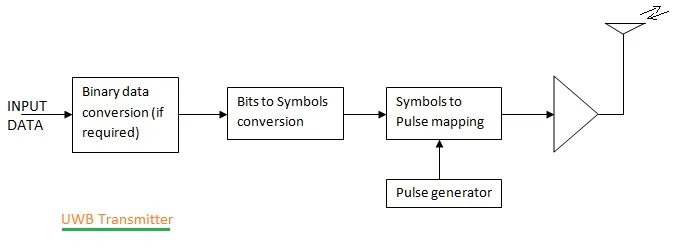
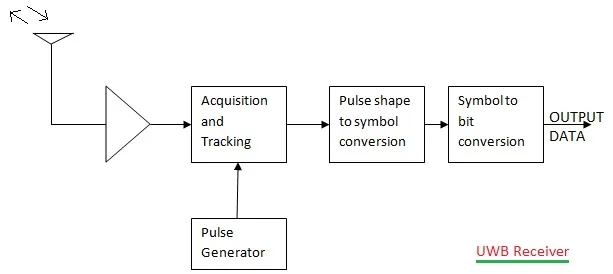
Drawbacks or Disadvantages of UWB
- Higher Cost: UWB technology can be more expensive to implement.
- Slower Adoption Rate: UWB hasn’t been as widely adopted as some other wireless technologies.
- Long Signal Acquisition Times: Acquiring and locking onto a UWB signal can take longer.
- Emission Limits: Regulatory bodies like the FCC impose limits on UWB emission power (less than 0.5 mWatt max power over 7.5 GHz band).
- Co-existence and Interference Issues: UWB can sometimes interfere with or be interfered with by other radio technologies.
Summary
UWB technology provides highly accurate wireless positioning and secure short range communication, making it a valuable solution for next generation tracking, automation and IoT applications.
Continue Learning UWB Technology
- UWB Basics Tutorial
- UWB Physical & MAC Layers
- UWB Frame Structure
- Understanding UWB Networks
- UWB Radar Tutorial
- UWB : Key Advantages & Disadvantages
- UWB Anchor Vs Tag : Key differences
- UWB Antenna Types & their benefits