
What is Telemedicine: 5 Advantages and Disadvantages
Advertisement
Telemedicine is the delivery of healthcare services through digital communication technologies, enabling remote consultation, diagnosis, monitoring, and medical advice. Its advantages include improved healthcare accessibility, reduced travel time, and greater convenience, whereas its disadvantages include limited physical examination, technology dependence, and privacy or connectivity challenges.
What is Telemedicine?
Telemedicine encompasses the tools and methods used to deliver healthcare services through information and communication technologies. It facilitates the exchange of information for diagnosis, treatment, and disease prevention. Crucially, it doesn’t require the traditional face-to-face interaction between a patient and a doctor. This is particularly useful when managing infectious diseases like COVID-19 and the flu.
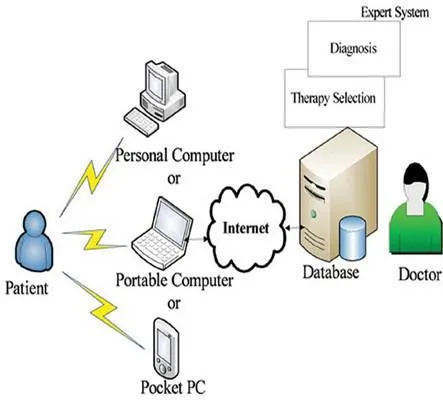 Image courtesy: Scientific Research Publishing Inc.
The figure above illustrates a typical telemedicine setup. With advancements in AI (Artificial Intelligence) and ML (Machine Learning) algorithms, telemedicine has become more popular and user-friendly.
Telemedicine can connect:
- Patient to physician (doctor)
- Physician to patient
- Physician to physician across different locations
Telemedicine apps allow patients to store health data like prescriptions, scan results, and blood/urine reports. Lab results can be communicated electronically, enabling prompt initiation of symptomatic treatment.
Benefits or Advantages of Telemedicine
- Maintains Standards: Telemedicine ensures the same standards, quality, and safety as in-person physician visits.
- Reduces Emergency Room Overcrowding: It helps prevent emergency rooms from becoming overcrowded.
- Limits Exposure: It reduces the exposure of healthcare workers to infected individuals or COVID-19 patients.
- Conserves Resources: By keeping patients at home, it cuts down on the use of masks, gowns, and gloves for healthcare workers.
- Saves Time and Costs: It saves travel time, energy, and costs for patients needing regular check-ups and minor consultations.
- Accessible Healthcare: Patients with mobility, speech, or breathing difficulties can use this technology to avoid physical clinic visits.
- Ideal for Remote Regions: It’s an excellent tool for countries or regions with limited medical professionals and a high patient population.
Drawbacks or Disadvantages of Telemedicine
- Internet Dependency: The quality of voice and video depends on the internet speed of both patients and doctors.
- Training Requirements: Medical experts need additional training to effectively use the telemedicine system.
- Care Continuity Issues: Frequent changes in physicians can reduce care continuity due to the lack of complete historical backgrounds of patients with doctors.
- Licensing Issues: Training and using telemedicine can involve licensing complexities.
- Evolving Technology: The technology is still evolving, and widespread adoption across the globe will take time.
Summary
Telemedicine has transformed healthcare delivery by expanding access to medical professionals, supporting remote patient monitoring, and improving healthcare efficiency for both providers and patients. Its healthcare advantages enhance convenience and continuity of care, although technology infrastructure, clinical limitations, regulatory compliance, and patient privacy remain important considerations. Telemedicine has gained significant popularity, especially in countries like the US and China, to combat outbreaks like COVID-19.