
What is SaaS: Advantages and Disadvantages of Software as a Service
Advertisement
Software as a Service (SaaS) is a cloud computing model that delivers software applications over the Internet through subscription based access instead of local installation. Its advantages include scalability, automatic updates, and reduced infrastructure costs, whereas its disadvantages include Internet dependence, recurring subscription fees, and data privacy considerations.
Key features of SaaS, application examples and Vendors
Introduction: SaaS allows users to access specific applications online, effectively providing software applications as a service to end users. In this model, software is deployed on a hosted service and accessed via the internet.
Examples of SaaS applications:
- Billing and Invoicing systems
- CRM (Customer Relationship Management) apps
- Help Desk apps
- HR (Human Resource) solutions
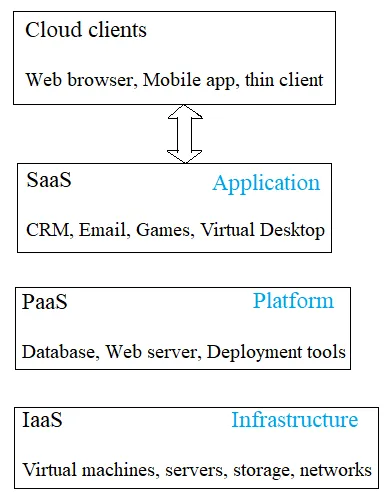
Figure 1: Tasks performed by SaaS
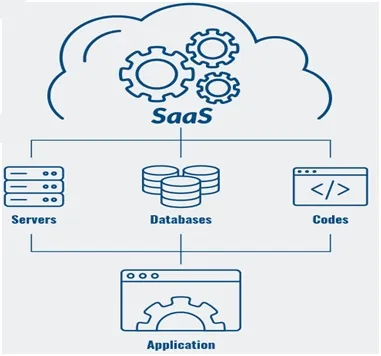
Figure 2: Application example of SaaS
Examples of SaaS vendors:
- SalesForce
- Oracle
- SAP
- Intuit
- Microsoft
- Postini
- Netsuite
Benefits or Advantages of SaaS
- Cost-Effective: SaaS is generally the most cost-effective cloud service, as providers lease the software rather than the underlying resources.
- Easy Setup: Requires minimal planning and is easy to set up.
- Simple to Use: Applications are typically straightforward and readily available.
- Rapid Deployment: Offers rapid deployment as software applications are fully provisioned on demand.
- Efficient License Use: Provides efficient use of software licenses.
- Stable Software: Software is typically very stable, backed by the cloud provider’s robust infrastructure and IT support team.
- Centralized Management: Offers centralized management of data and applications.
- Provider-Managed Platform: Platform responsibilities are managed by the providers, freeing customers from application management concerns.
- Multitenant Solutions: SaaS offerings are usually multitenant, allowing for efficient resource utilization.
Drawbacks or Disadvantages of SaaS
- Limited Control: Customers have limited control over the system processing their data.
- Shared Resources: Little control over who else is using the software, potentially impacting performance, such as in the case of Dropbox.
- Parameter Limitations: Limited control over the software’s parameters and configurations.
- Deployment Control: Limited control over deployment, upgrade, and testing methodologies.
- Limited SaaS Solutions: Currently, only a subset of software solutions are offered in a SaaS format.
- Integration Challenges: Integration with other software or existing systems can be difficult or unsupported.
- Data Security Concerns: The cloud provider has full access to customer data unless robust cryptography is implemented.
Summary
SaaS has transformed software delivery by providing flexible, cost effective, and easily accessible applications for businesses and individuals. Its cloud based advantages improve collaboration, maintenance, and scalability, while service availability, vendor dependence, and security considerations remain important factors when selecting SaaS solutions.
Continue Learning Cloud Computing Fundamentals
- IaaS vs PaaS vs SaaS: Understanding the Differences
- Cloud Computing Architecture Basics
- Understanding Cloud Computing Deployment Models
- Cloud Computing: Advantages & Disadvantages
- Edge Computing vs Cloud Computing
- Edge Computing vs Cloud Computing vs Fog Computing
- Mobile Edge Computing vs Cloud Computing