
What is RF Power Combiner and Divider: 5 Pros and Cons
Advertisement
An RF power combiner and divider is a passive microwave component that combines multiple radio frequency signals or evenly distributes a single RF signal across multiple output ports. Its advantages include efficient power distribution and simplified RF system design, while its disadvantages include insertion loss, limited bandwidth, and impedance matching requirements.
RF Power Combiner/Divider specifications
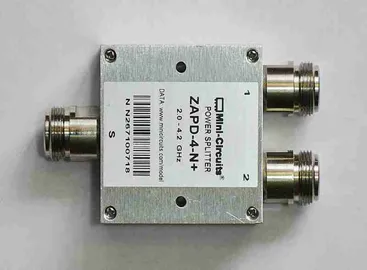
RF power dividers and combiners are essential components in RF and microwave systems. They are used to split a signal into multiple signals (power divider) or combine multiple signals into one (power combiner). They play crucial roles in various applications, including antenna arrays, signal distribution networks, and power amplifiers.
The selection of a suitable RF power combiner/divider requires careful consideration of various specifications, including:
- Frequency range
- Insertion loss
- Isolation
- Return loss (VSWR)
- Power handling capability
- Amplitude balance
- Phase balance
- Impedance
Benefits or Advantages of RF Power Combiner and Divider
-
Increased System Power: Power combiners allow the combination of multiple amplifiers to achieve higher output power levels than a single amplifier can provide.
-
Improved System Reliability: By using multiple amplifiers in parallel with a power combiner, the system can tolerate the failure of one amplifier without a complete loss of signal. This redundancy improves overall system reliability.
-
Flexible Signal Distribution: Power dividers enable the distribution of a single signal to multiple destinations, such as different antennas in an array or various components within a system.
-
Enhanced System Performance: In some applications, power dividers and combiners can be used to improve signal-to-noise ratio (SNR) or reduce intermodulation distortion (IMD).
-
Cost-Effective Solutions: In certain scenarios, using multiple lower-power amplifiers combined with a power combiner can be more cost-effective than using a single high-power amplifier.
Drawbacks or Disadvantages of RF Power Divider and Combiner
-
Insertion Loss: Power dividers and combiners introduce some insertion loss, meaning that the output power is always less than the input power. This loss needs to be accounted for in system design.
-
Isolation Limitations: Perfect isolation between ports is not achievable in practical power dividers and combiners. Limited isolation can lead to signal leakage and interference.
-
Impedance Matching Challenges: Maintaining proper impedance matching across the frequency band of operation can be challenging, especially in wideband designs. Mismatches can lead to signal reflections and performance degradation.
-
Complexity and Cost: Implementing high-performance power dividers and combiners can add complexity and cost to the system, particularly when high isolation and low loss are required.
-
Power Dissipation: The insertion loss in power combiners and dividers manifests as heat. This heat dissipation can be a concern in high-power applications and may require thermal management solutions.
Summary
RF power combiners and dividers are essential building blocks in wireless communication, radar, satellite, and RF testing systems by enabling reliable signal routing and power management. Their operational benefits include improved system flexibility and efficient signal distribution, although insertion losses, bandwidth limitations, and design complexity should be considered for optimum RF performance.
Power Dividers, Splitters & Combiners
Deep dives into the components used to split a single RF signal into multiple paths or combine multiple signals into one.
- Power Divider vs Power Splitter
- Wilkinson Power Dividers: Advantages & Disadvantages
- Broadband Power Divider for Wi-Fi 8 (App Note)
- 90-Degree vs 180-Degree Hybrid