
What are Motion Sensors: Advantages and Disadvantages, Comparison
Advertisement
A motion sensor is an electronic device that detects movement within a monitored area using technologies such as infrared, microwave, ultrasonic, or image processing. Motion sensors are widely used in security, automation, smart homes, and industrial systems. Their drawbacks include false alarms, environmental sensitivity, and installation considerations.
Active Vs. Passive Motion Sensor
Definition: A motion sensor is a device that detects movement. There are two main categories: active and passive.
-
Active Motion Sensor: Emits a radio frequency signal and analyzes the reflected frequency to detect motion. A microwave motion sensor is an example of an active sensor.
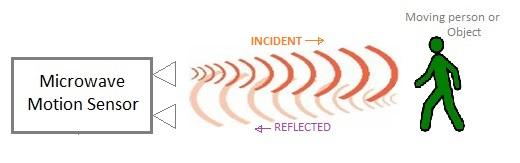
-
Passive Motion Sensor: Detects changes in heat or light to identify movement. The PIR sensor is a common example.
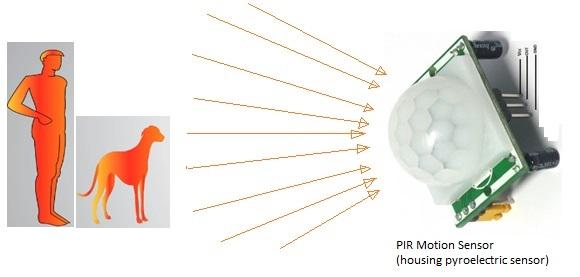
PIR (Passive Infrared) sensors measure infrared radiation emitted from objects within their field of view (FOV). They establish a baseline based on the ambient heat. When a person or object enters the FOV, the sensor detects a change in thermal energy, indicating movement.
Advantages of Motion Sensors
Here’s a breakdown of the advantages of both active and passive motion sensors:
- Active Sensors:
- Can operate effectively in harsh environments with irregular heat cycles.
- Have a long lifespan, often around 100,000 hours.
- Passive Sensors:
- Reliably detect motion in both light and dark indoor conditions.
- General Advantages:
- Enhance security by detecting suspicious activity.
- Easy to install.
Disadvantages of Motion Sensors
Here’s a look at the disadvantages associated with active and passive motion sensors:
- Active Sensors:
- High-power radio frequency emissions can be harmful to humans.
- Microwave frequencies cannot penetrate metal objects.
- Passive Sensors:
- Do not function properly above 35°C (95°F).
- Require a line of sight (LOS) to operate; they do not work in non-LOS environments.
- Insensitive to very slow movements.
- PIR sensors have a limited range, typically around 10 meters for human detection.
- Any moving object can trigger a PIR sensor, leading to false alarms.
Summary
Motion sensors provide automated detection for security, surveillance, lighting control, and smart building applications. Explore the advantages and disadvantages of motion sensors, including energy efficiency, enhanced safety, false triggers, and environmental limitations.
Advertisement


