
What is HTTP Protocol : Advantages and Disadvantages
Advertisement
HyperText Transfer Protocol (HTTP) is the foundation of data communication on the World Wide Web, enabling browsers and servers to exchange web content. It follows a request-response model and supports web applications globally. Advantages include simplicity and widespread adoption, while disadvantages include lack of built-in security and increased network overhead.
Key Features of HTTP Protocol
HTTP (Hypertext Transfer Protocol) serves as the communication backbone between web clients (like your browser) and web servers. It facilitates the transfer of data, allowing you to browse websites and interact with online services.
- It typically establishes an unsecured connection, making it potentially vulnerable to hacking.
- HTTP relies on standard TCP/IP and UDP protocols for data transmission.
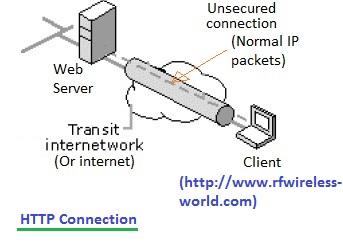
A more secure version of HTTP is HTTPS. HTTPS encrypts data before transmission, ensuring safer communication. It utilizes security protocols like SSL/TLS at the transport layer and potentially at layers 2 and 3.
HTTP is commonly used for web browsing and email applications, operating on port 8080 or 80. It follows a request/response model. The client sends an HTTP request to the server, which then provides the requested resources (HTML files, etc.) or performs actions on behalf of the client, ultimately returning a response.
HTTP, being an application layer protocol, is built upon TCP. HTTP/1.0 employs methods like GET, POST, and HEAD, while HTTP/1.1 expands on these with PUT, DELETE, TRACE, OPTION, and CONNECT.
Benefits and Advantages of HTTP
- Lower Resource Usage: It consumes less CPU and memory due to fewer simultaneous connections.
- HTTP Pipelining: Enables the pipelining of requests and responses, improving efficiency.
- Reduced Network Congestion: Fewer TCP connections lead to less congestion on the network.
- Reduced Latency: Handshaking happens only during initial connection setup. Subsequent requests experience lower latency because there’s no repeated handshaking.
- Error Reporting: Errors can be reported without terminating the TCP connection.
Drawbacks of Disadvantages of HTTP
- Point-to-Point Connection: Primarily designed for point-to-point connections.
- Not Optimized for Mobile: Lacks specific optimizations for mobile devices.
- No Push Capabilities: Doesn’t inherently support server-initiated push notifications.
- Verbose: The protocol can be quite verbose, adding overhead to data transmission.
- Unreliable Exchange (without retry logic): Doesn’t guarantee reliable exchange without implementing retry mechanisms.
- Server Availability Issues: The client doesn’t close the connection immediately after receiving all the data, potentially making the server unavailable for a longer duration.
Summary
HTTP is the core protocol used for web communication and content delivery. Advantages include simplicity and universal compatibility, while disadvantages include security vulnerabilities without HTTPS protection. HTTP/1.1 and HTTP/2 have emerged as successors to HTTP/1.0, addressing many of its limitations.
Advertisement


