
What is Biosensor : Advantages and Disadvantages
Advertisement
A biosensor is an analytical device that combines a biological sensing element with an electronic transducer to detect chemical or biological substances. It is widely used in healthcare, environmental monitoring, and food safety. Advantages include high sensitivity and rapid detection, while disadvantages include limited lifespan and calibration requirements.
Introduction
Biotechnology is rapidly advancing, creating a significant demand for on-site, rapid, and point-of-care testing across various sectors. This includes healthcare, food safety, environmental monitoring, and biosecurity. Advancements in microfabrication and miniaturization technologies like microelectronics, nanotechnology, and microfluidics have spurred the development of biosensors. Furthermore, diverse sensing and transduction methods, such as electrochemical, optical, piezoelectric, and magnetic techniques, offer numerous options for creating different types of biosensors.
What are Biosensors?
A biosensor comprises two key components: a bioreceptor and a transducer.
- Bioreceptor: A biomolecule that recognizes the target analyte.
- Transducer: A component that converts the recognition event into a measurable signal.
These components are integrated into a single sensor design. Biosensors find applications in diverse fields such as healthcare, food safety, the military, security, diagnostics, and environmental monitoring.
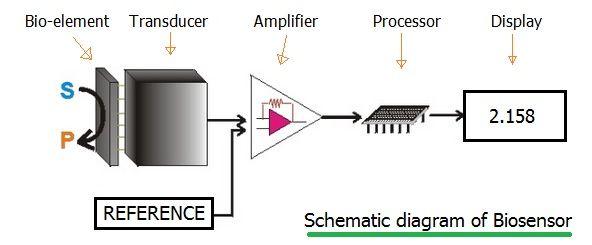
Image: Biosensor
Different types of biosensors exist, categorized by their transduction mechanism. Examples include conventional, piezoelectric, conductimetric, enzyme thermistor, and capacitive transducers.
Advantages of Biosensors
The following are general benefits of using biosensors:
- High Sensitivity: Biosensors enable the detection and quantification of low analyte concentrations or subtle changes in biomolecular interactions.
- High Selectivity: They can detect and measure specific target analytes while minimizing interference from other components in complex samples.
- Rapid Response Times: Biosensors allow for quick and real-time measurements of biological processes or analytes.
- Portability and Compactness: Their design makes them suitable for wearable devices, on-site testing, and on-the-spot diagnostics.
- Simultaneous Detection: Some biosensors can simultaneously detect multiple analytes, enabling parallel analysis in a single measurement.
- Small Sample Volume: Biosensors require only small sample volumes compared to traditional lab techniques, reducing the need for extensive sample collection and minimizing waste.
- Versatility: Biosensor platforms can be adapted to detect a wide range of analytes, including small molecules, nucleic acids, proteins, and cells, making them versatile for various applications.
Note: The specific benefits can vary based on the biosensor technology, type, application, and implementation methodologies.
Disadvantages of Biosensors
The following are limitations or drawbacks of biosensors. Researchers and companies are continually working to address these limitations and improve the performance, reliability, and usability of biosensors for diverse applications:
- Susceptibility to Interference: Biosensor measurements can be affected by interference or matrix effects caused by components present in the complex samples being tested, which can impact their accuracy and specificity.
- Environmental Sensitivity: Biosensor performance can be influenced by environmental factors such as temperature, pH, humidity, or electromagnetic fields, requiring careful compensation.
- Limited Lifespan: Some biosensors have a limited lifespan due to device degradation, sensor drift, and the need for component replacements.
- Calibration Requirements: Regular calibration and monitoring are necessary to maintain accuracy and stability over time.
- Cost: Some biosensors can be expensive due to the specialized equipment, materials, or expertise required for their development and maintenance.
Summary
Biosensors detect biological and chemical substances with high sensitivity. Advantages include rapid analysis and accuracy, while disadvantages include maintenance and stability challenges.
Advertisement


