
What is Hyperloop Technology : Advantages and Disadvantages
Advertisement
Hyperloop technology is a proposed high speed transportation system that moves passenger or cargo pods through low pressure tubes at near supersonic speeds. It aims to revolutionize long distance travel with reduced transit times. Advantages include exceptional speed and energy efficiency, while disadvantages include high development costs and technological challenges.
Introduction: Hyperloop represents a potential fifth mode of transportation, designed for ultra-fast travel between major cities. The concept was initially introduced by Elon Musk in 2012. Currently, a joint team from Tesla and SpaceX are working on developing this transportation system.
Hyperloop Technology System Components
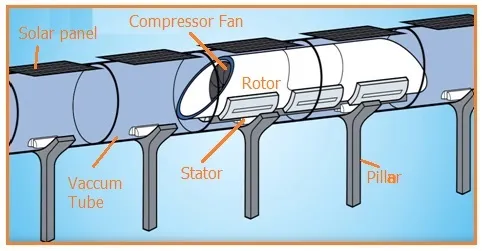
Figure 1: Hyperloop technology based transportation system.
As depicted in Figure 1, stators (located in the tunnel) and rotors (on the passenger capsule car) generate magnetic fields. These fields are used to propel the capsule within a steel tunnel. The system is based on the vactrain concept, which uses magnetically levitating trains in the form of capsules within evacuated (airless) or partially evacuated tubes. This allows for potential speeds of thousands of miles per hour. There are two proposed versions : a passenger only capsule and a passenger plus vehicle capsule.
How Hyperloop Technology Works
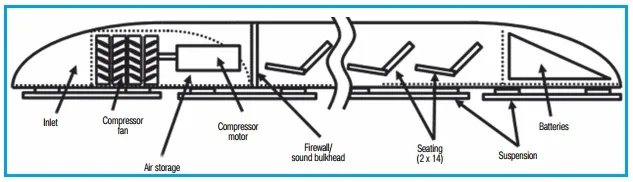
Figure 2: Hyperloop passenger capsule subsystem
The Hyperloop system primarily consists of two key components: the tube containing the tracks, and the capsules that transport passengers. Figure 2 illustrates the internal subsystems of a hyperloop capsule. As shown, the capsule contains an air compressor at the front, a passenger compartment in the middle, and a battery compartment at the back.
Understanding the Working Operation:
While the tube tracks are designed to be as close to a vacuum as possible, they are not completely devoid of air. The low-pressure air inside the capsule can cause air compression, creating a cushion of air that slows the capsule down. The Hyperloop technology addresses this issue by using a compressor fan at the front of the capsule.
This compressor fan redirects air to the back of the capsule, providing additional propulsion. The redirected air is then sent to air bearings, which levitate the metal capsules above the tube surface, reducing friction. This allows the capsules to achieve very high speeds within the tube.
Solar panels are envisioned to supply the power requirements for the Hyperloop system. The tube track is designed to withstand harsh weather conditions and natural disasters such as earthquakes.
The Hyperloop aims to cover distances of approximately 550 km in just 30 minutes, which is significantly faster than modern air travel. Each capsule is expected to accommodate about 28 passengers (two rows with 14 passengers in each). Capsules are projected to depart every 2 minutes, representing the average departure time.
Benefits or Advantages of Hyperloop Technology
The following are the key advantages of Hyperloop technology:
- High Speed: Offers very fast transportation speeds, potentially twice as fast as aircraft.
- Low Power Consumption: Expected to have relatively low power consumption.
- Low Cost (Long-Term): Can be a low-cost transportation system in the long run.
- Weather Immunity: Immune to adverse weather conditions.
- Earthquake Resistance: Resistant to earthquakes.
- Safety: Considered a safe mode of transportation.
Challenges or Disadvantages of Hyperloop Technology
The following are the main disadvantages and challenges facing Hyperloop technology:
- Potential Passenger Discomfort: The high speed of the capsule (approaching the speed of sound) may cause dizziness due to vibration and jostling.
- High Initial Investment: The initial investment to build the system is very substantial.
- Technical Complexity: Manufacturing the long vacuum chamber requires advanced technical skills. Maintaining the vacuum is costly and presents inherent risks.
- Land Use Issues: Acquiring land rights for the project’s deployment will be a significant concern.
- Safety Concerns: The risk to life is very high in the event of a system malfunction or accident.
- Limited Space: Limited space inside the capsule restricts passenger movement.
- Thermal Expansion: Steel tracks are susceptible to expansion and shape changes due to temperature variations, which can damage the track. This must be carefully considered during system design, taking into account the environment of the deployment location.
- Environmental Impact: Installation may require the cutting down of a significant number of trees, leading to environmental loss.
Summary
Hyperloop technology offers futuristic high speed transportation using vacuum tube systems. Advantages include rapid travel and efficiency, while disadvantages include infrastructure complexity and substantial investment requirements.