
What is Flexible Waveguide : Advantages and Disadvantages
Advertisement
A flexible waveguide is a bendable transmission structure used to carry microwave and RF signals between components while allowing mechanical movement and installation flexibility. It is commonly used in radar, satellite, and communication systems. Advantages include routing flexibility and easy installation, while disadvantages include higher insertion loss and reduced power handling.
Introduction to Microwave Waveguide : Features & Types
As illustrated in the figure below, a waveguide is essentially a hollow metallic conductor designed to carry high frequency electromagnetic waves, specifically microwaves. Waveguides typically operate within the radio frequency range of 300 MHz to 300 GHz. Functionally, they act as high pass filters for frequencies.

Rugged waveguides primarily come in two shapes: circular and rectangular. One challenge with waveguides is power loss due to induced current within the walls. This can be minimized by using low-resistance conducting materials in their construction.
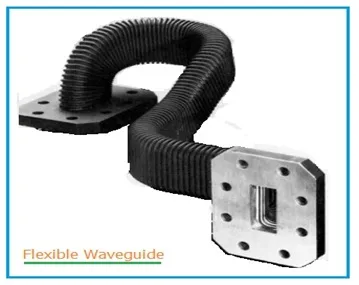
Figure 2 shows an example of a flexible waveguide.
Advantages of Flexible Waveguides
Here are the key advantages of using flexible waveguides:
- Flexibility and Twistability: The primary advantage is, of course, their flexible and twistable nature.
- Full Band Operation: They can operate across the entire designated frequency band.
- Vibration Isolation: Flexible waveguides effectively isolate vibration and other mechanical movements, ensuring uninterrupted RF signal propagation. This is because they can stretch and compress as needed.
- Ruggedness (Specific Types): Some flexible, non-twistable types are ruggedly constructed and offer lower insertion loss compared to other flexible waveguide designs.
Disadvantages of Flexible Waveguides
Despite their benefits, flexible waveguides also have some drawbacks:
- Higher Insertion Loss: They generally exhibit higher insertion loss compared to rigid waveguide types.
- Fragility: They are relatively fragile and require careful handling.
- Jacket Requirement: Pressure-sealed flexible waveguides usually need an external jacket.
- Higher Cost: They are often more expensive than other waveguide options.
- Intermodulation Products: Jointed sections in flexible waveguides can introduce low-level intermodulation products, which can fall within the receiver band and degrade receiver performance.
Summary
Flexible waveguides provide adaptable RF signal transmission in microwave systems. Advantages include installation convenience and mechanical flexibility, while disadvantages include signal loss and power limitations.
Continue Learning Microwave Waveguide
- Waveguide Basics Tutorial: Types, Modes, Cutoff Frequency, Pros & Cons
- Rectangular vs. Circular Waveguide
- Rectangular Waveguide Dimensions chart
- TEM Waves and Waveguide Modes: A Comprehensive Overview
- What is Dominant Mode in Rectangular & Circular Waveguide
- Frequency Bands used in Waveguide
- Advantages & Disadvantages of Microwave Waveguide
- Waveguide Vs. Coaxial Line : Key Differences
Explore More Waveguide Components
- Waveguide Isolator
- Waveguide Gasket Types
- Waveguide Switch Types
- Waveguide Tees - E-Plane & H-Plane
- Circular Waveguide Polarizer Types
- Waveguide Components Manufacturers
- Waveguide Diplexer
- Waveguide Antennas - WR28 & WR90 Horn antennas
- Waveguide Frequency Multiplier
- Coaxial to Waveguide Adapters
- Circular Waveguide Mode Suppressors
- Waveguide Bends & Flanges
- Waveguide Adapters
- Waveguide Couplers
- Waveguide Filters
- Waveguide Phase Shifting Structures
- Waveguide to Microstrip Transitions