
What is Energy Harvesting : Advantages and Disadvantages
Advertisement
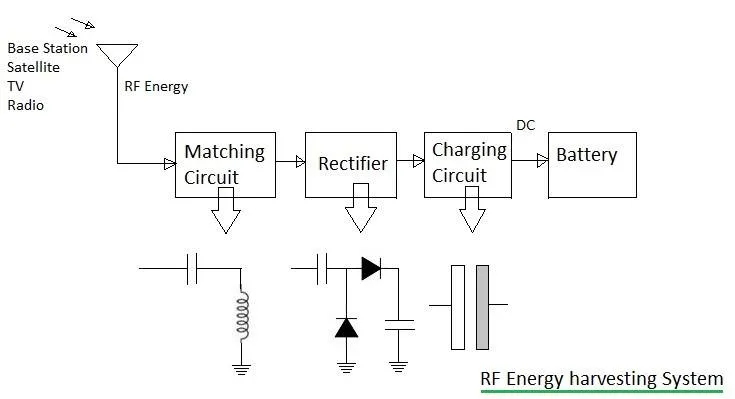
Energy harvesting is the process of capturing and converting ambient energy sources such as solar, thermal, vibration, RF, or wind energy into usable electrical power. It supports self-powered IoT devices and wireless sensors. Advantages include reduced battery dependence and sustainability, while disadvantages include low power output and environmental dependency.
Energy Harvesting Sources
- Solar: Utilizes photovoltaic cells for energy conversion.
- Mechanical: Employs various conversion mechanisms, including vibration, electrostatic, electromagnetic, piezoelectric effects, wind, strain, fluid flow, blood pressure, breathing, human body movement, and other kinetic sources.
- Thermal (Pyroelectric): Leverages thermogenerators as the primary conversion mechanism.
- Biochemical: Uses bio-fuel cells and redox reactions, such as glucose/O2, for energy conversion.
Advantages of Energy Harvesting Techniques
- Solar: Simple, relatively inexpensive, and efficient (approximately 15mWatt/cm2).
- Mechanical: Can be environmentally enclosed and protected, offers reliable and predictable energy output, and can provide higher energy output compared to some other methods.
- Thermal or Pyroelectric: No moving parts, potentially long lifespan, and potential for wearable applications.
- Biochemical: Constant fuel source availability, suitable for implantable applications in humans.
Disadvantages of Energy Harvesting Techniques
- Solar: Often requires overcharge protection and cannot directly power sensors. Sunlight is also an unpredictable energy source.
- Mechanical: Wear and tear on moving parts can limit lifespan. Piezoelectric materials can degrade over time. Electromagnetic devices can be bulky. Limited power output and practical operational duration.
- Thermal: Low energy yield, higher cost, low power output (approximately 40µW/cm3), limited usage due to high-temperature gradient requirements, and power output heavily depends on thermal gradient conversion efficiency.
- Biochemical: Sensitive to external environment, not widely available commercially, and limitations on the lifetime and reliability of biological components.
Summary
Energy harvesting converts ambient energy into electricity for autonomous devices. Advantages include longer operational life and reduced maintenance, while disadvantages include limited power availability and environmental constraints.
Energy Harvesting & Green Technologies
Discover how modern electronics pull ambient energy from the environment to create battery-free IoT devices, plus explorations of macro-level renewable energy sources.
- Energy Harvesting Techniques, Types, and Basics
- RF Energy Harvesting: Advantages & Disadvantages
- Active vs Passive Energy Harvesting Circuits
- Piezoelectric Energy Harvesting
- Ocean Wave Energy Harvesting
- Solar Energy: Advantages and Disadvantages
- Geothermal Energy: Advantages and Disadvantages
- Wind Energy: Advantages and Disadvantages
- Hydro Energy: Advantages and Disadvantages
- Thermal Energy: Advantages & Disadvantages
- Biomass Energy: Advantages and Disadvantages
- Mechanical Energy: Advantages and Disadvantages
- Chemical Energy: Advantages and Disadvantages
- Sound Energy: Advantages and Disadvantages
- Gravitational Energy: Advantages and Disadvantages
- Light Energy: Applications, Advantages, and Disadvantages