
What is Cognitive Manufacturing : 5 Advantages and Disadvantages
Advertisement
Cognitive manufacturing combines artificial intelligence, machine learning, IoT, and analytics to optimize production processes and improve operational efficiency. It enables predictive maintenance, quality control, and intelligent automation. Advantages include increased productivity and reduced downtime, while disadvantages include cybersecurity risks, high investment costs, and implementation complexity.
Introduction: IoT, in particular, has seen widespread adoption across various industries, leading to a massive increase in data volume. Traditional computing techniques often struggle to process and analyze such vast quantities of data effectively. To address this challenge, cognitive manufacturing processes are being increasingly adopted.
What is Cognitive Manufacturing?
Cognitive manufacturing refers to a system that leverages cognitive computing, the Industrial Internet of Things (IIoT), and advanced analytics to optimize manufacturing processes. This infrastructure utilizes data gathered from equipment and processes to generate actionable insights across the entire value chain.
Common applications of cognitive manufacturing include managing and optimizing compressors, boilers, furnaces, and rotating equipment, where failures are frequently encountered.
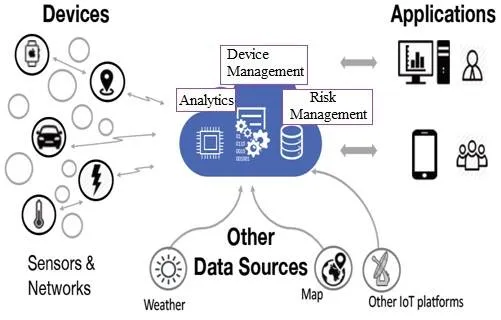
Image Courtesy : IBM
One prominent example of cognitive manufacturing is IBM Watson IoT, as illustrated in the figure. It facilitates the transformation of manufacturing processes in three key areas:
- Intelligent asset & equipment management
- Cognitive processes & operations
- Smarter resource & optimization
For more detailed information, please visit ibm.com.
Advantages of Cognitive Manufacturing
- Increased Efficiency: Cognitive manufacturing significantly enhances the efficiency of manufacturing processes. This leads to improved flexibility, reliability, yield, and overall availability of manufacturing operations.
- Fast Assembly Line Setup & Monitoring: It enables rapid assembly line setup and provides continuous execution monitoring of manufacturing processes.
- Higher Accuracy and Business Continuity: Cognitive systems offer high accuracy rates (around 95%), ensuring business continuity and resulting in significant savings in maintenance costs.
- Enhanced Safety: It promotes greater safety by minimizing the likelihood of major safety-related accidents.
- Reduced Calibration & Testing Time: The total time required for calibration and testing of critical equipment is substantially reduced.
- Reduced Downtime & Defect Rates: Unplanned downtime and defect rates are significantly minimized.
Disadvantages of Cognitive Manufacturing
- Vulnerability to Breaches: Due to the handling of large volumes of data, these systems are susceptible to security breaches.
- Longer Development Efforts: The inherent complexity of the technologies involved necessitates longer development cycles.
- Need for Skilled Engineers: The development and maintenance of these systems require skilled software and hardware engineers, which can increase costs for the company.
- Extensive Training Required: Users of these systems require meticulous and comprehensive training.
Summary
Cognitive manufacturing leverages AI and IoT to enhance industrial productivity. Advantages include predictive maintenance and efficiency, while disadvantages include deployment complexity and security concerns.