
What is a Database System : Advantages and Disadvantages
Advertisement
A database system is an organized framework used to store, manage, retrieve, and update data efficiently. It consists of databases, database management software, and users. Advantages include centralized data management and improved security, while disadvantages include implementation costs, maintenance requirements, and potential system failures.
Why Database System?
A database is a collection of related data stored in a way that allows for easy information retrieval. As illustrated in the figure below, a database is organized into rows and columns, forming tables.
Databases are versatile and can be used for various applications, such as managing product inventories, student registers, and customer data. They typically come in the following forms:
- Tables: Collections of related records.
- Fields: Individual categories of data stored in a database (e.g., name, telephone number).
- Records (Rows): Collections of related fields in a database (e.g., all the fields for one customer).
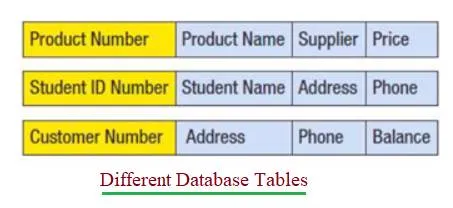 Image: An example of a database table.
DBMS (Database Management System)
A Database Management System (DBMS) is used for:
- Creating, maintaining, and accessing databases.
- A DBMS consists of a program, often called a database engine, that helps in storing and retrieving data.
- Examples of database systems include: Microsoft Access, OpenOffice Base, Corel Paradox, and Oracle database.
Benefits or Advantages of Database Systems
Here are the main benefits of using a database system:
- Data Consistency: Ensures that all copies of data are consistent. This leads to faster response times due to the structured arrangement of the data.
- Reduced Data Redundancy: Helps in controlling data redundancy, which minimizes storage requirements.
- Enhanced Security and Accessibility: Provides high security and facilitates easier data access.
- Improved Data Accuracy: Offers higher data accuracy.
- Easier Data Sharing: Sharing data is simpler across the entire organization for all authorized users.
Drawbacks or Disadvantages of Database Systems
Here are the drawbacks associated with using database systems:
- Increased Vulnerability: Leads to increased vulnerability, making regular backups essential.
- Complexity: DBMS is complex and requires training for designers, administrators, and users alike.
- Resource Intensive: Utilizes a substantial amount of memory and disk space.
- High Cost: Multiuser DBMS systems can be very expensive and incur high annual maintenance costs.
- Hardware Requirements: May require additional hardware to convert a file-based system to a database system.
Summary
Database systems provide structured data storage and management. Advantages include improved accessibility and security, while disadvantages include operational complexity and infrastructure costs.