
What are WiFi & Bluetooth Jammer : Top Manufacturers
Advertisement
WiFi and Bluetooth jammers are devices designed to interfere with wireless signals operating in commonly used ISM frequency bands. Discussions about such equipment are generally limited to authorized testing, research, and controlled security environments, as operation may be restricted or prohibited under local telecommunications regulations.
Basics of Jammer
RF jammers work by blocking unauthorized access to a network. It’s important to understand that jamming doesn’t discriminate between intended and unwanted wireless communication.
A jammer emits RF waves that prevent target devices from establishing or maintaining a connection with other devices.
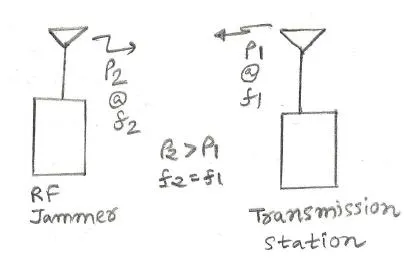
The jammer creates a radius within which it will block or jam wireless signals. Therefore, proper placement is crucial when installing a jammer in a home or office.
IMPORTANT NOTE: Using a jammer without proper authorization from regulatory bodies is illegal. Jammer usage can also prevent individuals from being reached by emergency services like police or fire brigades during critical situations.
WiFi Jammer Vendors
A WiFi jammer operates on the frequency bands and spectrum used by WLAN standards (IEEE 802.11a, 11n, 11ac, etc.).
The following table lists WiFi jammer vendors:
| Vendors | Description |
|---|---|
| Jammer-Store.com | • SPEC5 wifi jammer • Operates in 2.4 GHz and 5 GHz |
| Cell Phone Jammer. (https://www.synageva.org/) | • Model: WIFIJAMMER0004 • 4 Antenna version which blocks cellular and wifi signal. |
Bluetooth Jammer Vendors
A Bluetooth jammer operates on the frequency bands and spectrum used by Bluetooth standards (IEEE 802.15.1).
The following table lists Bluetooth jammer vendors:
| Vendors | Description |
|---|---|
| Cell Phone Jammer. (https://www.synageva.org/) | • Model WIFIJAMMER0003 • 3 Antenna version which blocks both wifi and bluetooth signals up to 15 meters. |
| Jammer-Store.com | The vendor can supply bluetooth jammer. |
Summary
WiFi and Bluetooth jamming technologies are used in specialized authorized security and testing environments to disrupt wireless communications. Usage is subject to regulatory approval and telecommunications laws in applicable jurisdictions.