
What is Sound Energy: 5 Advantages and Disadvantages
Advertisement
Sound energy is the mechanical energy produced by vibrating objects and transmitted through solids, liquids, or gases as sound waves. Its advantages include useful applications in communication, medical imaging, and industrial sensing, whereas its disadvantages include limited transmission in vacuum, noise pollution, and gradual energy loss over distance.
Sound Energy Conversion
- Sound energy arises from the vibration of particles within matter.
- Sound is a mechanical wave, meaning it needs a medium to travel.
- Examples of sound energy generation include drums, guitars, and radios. This energy often starts as mechanical energy.
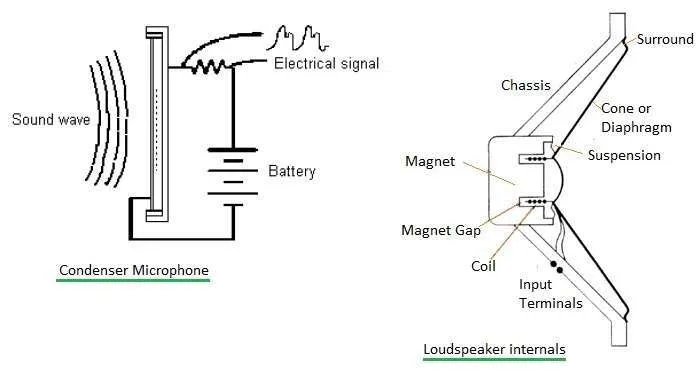
- Sound energy can be converted into electrical energy, and vice versa. Microphones facilitate the conversion of sound energy into electrical signals, while loudspeakers perform the reverse, turning electrical signals into mechanical vibrations that propagate through space.
- Sound stores energy, causing our eardrums to vibrate, which allows us to hear.
- We utilize sound energy in many ways daily, such as listening to music, watching TV, and talking on the phone.
Benefits or Advantages of Sound Energy
- Low Operation and Maintenance: Sound energy systems typically have minimal operational and upkeep requirements.
- No Fuel Required: Sound energy doesn’t rely on any kind of fuel source.
- Renewable Resource: It is considered a renewable energy source, making it sustainable.
- Pollution-Free: Sound energy generation itself doesn’t produce pollutants.
- Easily Convertible: Sound energy can be readily converted into electrical energy and the other way around.
- Long Distance Travel: The sound of whale songs can travel incredibly long distances in the ocean.
- Sensitive: Can detect minute differences.
Drawbacks or Disadvantages of Sound Energy
- Invisibility: Sound waves are invisible, so we can’t see the pressure waves created by sound energy.
- Destructive Potential: In certain situations, intense sound energy can break glass or other materials.
- Vacuum Limitation: Sound cannot travel through a vacuum; it requires a medium.
- Noise Pollution: If sound energy exceeds a certain power level, it can become annoying and harmful to humans.
- Hearing Damage: Prolonged exposure to loud sounds can permanently damage the hair cells in the inner ear, leading to hearing loss.
Summary
Sound energy plays a vital role in communication, healthcare, industrial inspection, and scientific research through technologies that utilize acoustic wave propagation. Its practical advantages enable numerous everyday and specialized applications, although environmental noise, transmission losses, and medium dependence remain inherent limitations.
Energy Harvesting & Green Technologies
Discover how modern electronics pull ambient energy from the environment to create battery-free IoT devices, plus explorations of macro-level renewable energy sources.
- Energy Harvesting Techniques, Types, and Basics
- RF Energy Harvesting: Advantages & Disadvantages
- Active vs Passive Energy Harvesting Circuits
- Piezoelectric Energy Harvesting
- Ocean Wave Energy Harvesting
- Solar Energy: Advantages and Disadvantages
- Geothermal Energy: Advantages and Disadvantages
- Wind Energy: Advantages and Disadvantages
- Hydro Energy: Advantages and Disadvantages
- Thermal Energy: Advantages & Disadvantages
- Biomass Energy: Advantages and Disadvantages
- Mechanical Energy: Advantages and Disadvantages
- Chemical Energy: Advantages and Disadvantages
- Gravitational Energy: Advantages and Disadvantages
- Light Energy: Applications, Advantages, and Disadvantages