
What is Rain Sensor: Advantages and Disadvantages
Advertisement
A rain sensor is an electronic device that detects rainfall and automatically activates or controls connected systems such as windshield wipers or irrigation controllers. Its advantages include improved automation and water conservation, while its disadvantages include occasional false detection and reduced performance under certain environmental conditions.
Rain Sensor working principle
A rain sensor is a device that detects rainfall and responds accordingly. They’re used in various applications, including shutting off irrigation systems and controlling automatic windshield wipers in cars. Rain sensors quickly turn off irrigation when rain starts to fall.
They often use water absorbing expansion disks that swell when exposed to raindrops. After a certain amount of rain, an electrical switch is activated, bypassing the regular irrigation cycle and turning off the automatic system. The disks then shrink when dry conditions return, reversing the process.
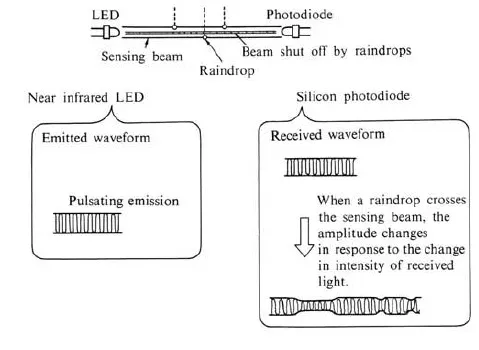
Figure-1 depicts the principle of a rain sensor in an automatic wiper system.
As shown in the figure, an LED emits light that’s received by a silicon photodiode. When it’s not raining, the light intensity remains constant. However, when raindrops fall, the light intensity changes depending on the size and number of drops.
In a car, the rain sensor is monitored by a microcontroller circuit that drives the wiper switch and motor to control the wipers.
Rain sensors are also used in rainwater harvesting systems, collecting rain for later use in homes, gardens, etc.
Benefits or Advantages of Rain Sensors
- Cost Savings: They help save money by turning off irrigation systems when it rains, reducing electricity bills.
- Extended System Lifespan: Rain sensors extend the life of systems like car wipers and irrigation systems by only running them when necessary.
- Water Conservation: They help save water during rain events, making it available for summer use and emergency applications like firefighting.
- Simple Operation: The operating principle is straightforward and easy to understand.
- Low Power Consumption: They consume very little power to operate.
- Easy Installation: Rain sensor-based systems are typically simple to install.
- Low Individual Cost: Individual rain sensors are relatively inexpensive.
Drawbacks or Disadvantages of Rain Sensors
- Direct Water Requirement: The system only functions when water falls directly onto the sensor.
- Increased System Cost: The overall system cost increases due to the need for additional components along with the rain sensor.
- Delayed Response to Avoid False Positives: To avoid false detections, rain sensors often require a short delay before activating, which might lead to a slight delay in response.
Summary
Rain sensors improve convenience, efficiency, and resource management by enabling automatic responses to changing weather conditions. Their practical advantages make them valuable for automotive, agricultural, and smart building applications, despite performance variations caused by installation quality and environmental factors.