
What is a Pedometer : 5 Advantages and Disadvantages
Advertisement
A pedometer is a wearable device that counts steps by detecting body movement during walking or running. It helps users monitor daily physical activity, estimate distance traveled, and encourage healthier lifestyles, making it a popular fitness tool for exercise tracking and wellness management.
Key Features and Selection Guide to Pedometers
- A pedometer typically comes in the form of a watch and records the number of steps a person takes by detecting motion of the hands or hips.
- Distance is calculated as: distance = number of foot steps x size of step
- Some pedometers use a GPS receiver chip to estimate the distance traveled.
- They can be electronic or electro-mechanical devices with an accuracy of about +/-5%.
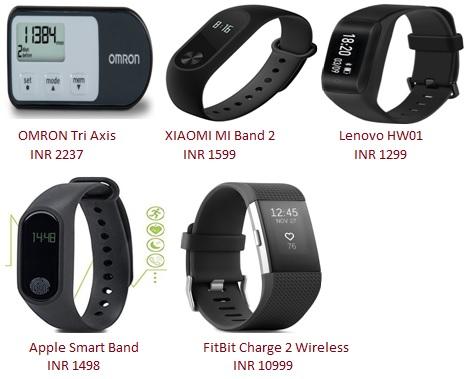
- Modern pedometers provide much more than just distance. They can also track sleep, monitor heart rate, and offer other data analysis.
- Pedometers are used not only by regular walkers but also by sports and fitness enthusiasts.
- They use motion sensors for measurement of physical activity. Some are designed using a metronome that counts steps by detecting vertical movement.
- Figure 1 (above) depicts some of the best pedometers available in the market.
Benefits or Advantages of Pedometers
- They are easy to use, simply worn on the wrist or hip.
- They are inexpensive and non-invasive.
- They are used to measure common activities like walking at schools and workplaces, and are also useful for regular walkers.
- Usually, pedometers provide a measurement of the distance traveled on foot. Modern pedometers also provide measurements of energy expended and time, and may also include heart rate monitoring.
- Most pedometers recommend 10,000 steps per day.
- They can capture both qualitative and quantitative information.
- They are quick and easy to use for larger groups, making them cost-effective for large group analysis.
Drawbacks or Disadvantages of Pedometers
- Some pedometers only assess hip movement.
- They are not useful for comparing different age groups of people.
- In competitions, there is a chance of tampering by participants.
- Some pedometers do not deliver accurate results while jogging or running. Hence, assessment is restricted to walking.
- They are most useful for measuring distance traveled when the stride length of the participants is known.
Summary
A pedometer is a wearable device that measures the number of steps taken by detecting body movement during walking or running. It helps users track physical activity, estimate distance, and monitor fitness goals.
Advertisement


