
What is Inductive Charging : Advantages and Disadvantages, working
Advertisement
Inductive charging is a wireless power transfer technology that uses electromagnetic fields to charge electronic devices without physical connectors. It is commonly used in smartphones, wearables, and electric vehicles. Advantages include convenience and reduced connector wear, while disadvantages include lower efficiency and slower charging speeds compared to wired methods.
Inductive Charging Working Principle
Inductive charging utilizes an electromagnetic (EM) field to transfer energy wirelessly between two objects.
A charging station is specifically designed for this purpose. Energy is transmitted through inductive coupling to the electrical device. This received energy is then used to charge the device’s batteries.
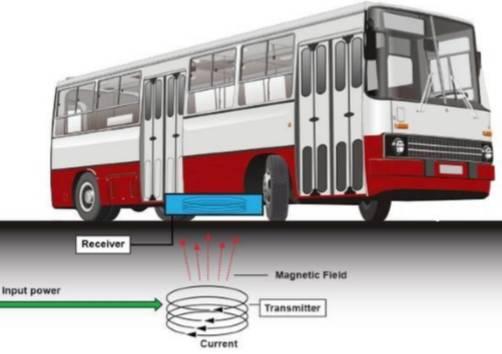
Inductive chargers employ an induction coil to generate an alternating EM field from the charging base. Portable devices, such as electric cars or trucks, use a second induction coil to receive this EM field. These EM fields are then converted back into electric current, which is used to replenish the battery of the EV.
The distance between the transmitter and receiver coils can be increased by using resonant inductive coupling. Furthermore, receiver coils made of silver plated copper or aluminum help minimize weight and reduce resistance caused by the skin effect.
Benefits or Advantages of Inductive Charging
- Protected connections: No exposed electrical contacts, reducing the risk of shorts or corrosion.
- Lower infection risk: Easier to clean and disinfect charging surfaces, making it suitable for medical environments.
- Durability: Eliminating physical connectors reduces wear and tear, increasing the lifespan of both the charger and the device.
- No requirement of cables: A cleaner and less cluttered environment.
- Increased convenience and aesthetic quality: Simplifies the charging process and can be more visually appealing.
Drawbacks or Disadvantages of Inductive Charging
- Slower charging: Generally slower charging speeds compared to wired charging methods.
- More expensive: Inductive charging systems tend to be more expensive than traditional wired chargers.
- Inconvenience: Sensitive to placement, requiring precise alignment between the charging base and device coil.
Conclusion
Inductive charging enables cable-free power transfer for electronic devices. Advantages include convenience and durability, while disadvantages include energy losses and reduced charging efficiency.
Advertisement


