
What is Geofencing : Advantages and Disadvantages
Advertisement
Geofencing is a location based technology that creates virtual geographic boundaries using GPS, Wi-Fi, or cellular networks. It triggers predefined actions when devices enter or leave designated areas. Advantages include automation and targeted services, while disadvantages include privacy concerns, battery consumption, and dependence on accurate location tracking.
Key Features, Working and Types of Geofencing
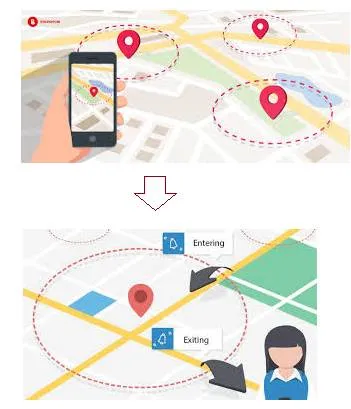
Geofencing is the creation of a virtual perimeter around a physical location, often configured using mapping services like Google Maps. This region is marked to monitor the entry or exit of a person, child, or asset.
The geofence region is typically circular, but other polygon shapes can be defined as well. When a device enters or exits this defined area, a notification (e.g., an SMS message) is generated and sent to registered mobile numbers. This entire process is referred to as geofencing. These geofences can represent predefined boundaries, like school zones or neighborhood limits.
There are two primary types of geofencing: active and passive. Geofencing leverages technologies like GPS, cellular networks, or WiFi to track devices within the defined geofences.
Active vs. Passive Geofencing
-
Active Geofencing: In this type, the user’s application is open on their mobile device. This application constantly uses GPS, which can drain the battery more quickly.
-
Passive Geofencing: This type doesn’t require the application to be constantly running in the foreground; it operates in the background. Furthermore, passive geofencing often doesn’t rely on GPS. Passive geofencing is mainly used to gather customer data and is less suitable for pushing advertisements to the user’s device.
Advantages of Geofencing
Following are some of the benefits of Geofencing.
- Targeted Customer Engagement: It allows businesses to target customers in shops or retail outlets with relevant ads and guide them to specific sections, potentially increasing sales.
- Influencing Purchase Decisions: Geofencing can be used to influence purchasing decisions by providing timely information or offers.
- No Additional Hardware Required: It doesn’t require specialized hardware. Mobile apps are readily available for both Android and iOS.
- Easy Implementation and Use: Geofencing is simple to set up and use, especially with the integration of services like Google Maps.
- Cost-Effective: Implementation is relatively inexpensive due to the affordability of mobile phones and the availability of free apps.
Disadvantages of Geofencing
Following are some of the drawbacks of Geofencing.
- Accuracy Limitations: The size and accuracy of geofences depend on the positioning technologies used. GPS, cellular, and WiFi-based geofencing can have accuracies ranging from 20 to 50 meters.
- Smaller Geofence Accuracy: For smaller geofences, Bluetooth positioning technologies like iBeacons and Eddystone beacons are used, offering accuracy down to about 2 meters.
- GPS Power Consumption: While GPS can be used for geofencing, its high power consumption makes it less suitable for battery-sensitive devices.
- Reliance on Positioning Technology: The reliability of geofencing is tied to the performance of underlying location technologies.
Summary
Geofencing enables location aware services through virtual geographic boundaries. Advantages include automation and targeted engagement, while disadvantages include privacy issues and positioning inaccuracies.