
What is 5G Radio Dot: Applications, Key Features
Advertisement
A 5G Radio Dot is a compact indoor radio unit designed to improve 5G coverage and capacity within buildings. Connected to a centralized baseband system, Radio Dots provide seamless indoor connectivity, higher data speeds and efficient network deployment in offices, airports, stadiums, shopping centers and enterprises. This page covers features of Ericsson 5G Radio Dot.
What is a 5G Radio Dot?
The 5G Radio Dot is essentially a small cell designed for 5G wireless networks. Its primary purpose is to address indoor coverage challenges by delivering high-speed connectivity, ultimately enhancing the user experience.
Compliant with the 3GPP standard, the 5G Radio Dot can boost throughput to over 2 Gbps. This palm-sized base station can be easily installed on the roof of a house or within a business premise. Its compact size and ease of installation make it a valuable asset in areas where macro radio signals struggle to penetrate, ensuring seamless 5G coverage.
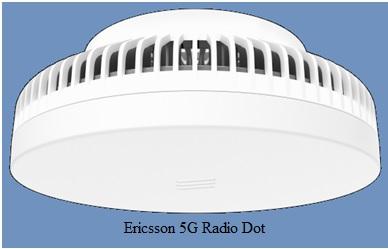
Image courtesy of Ericsson AB. Used for representation purposes.
Ericsson 5G Radio Dot Features
Ericsson claims the following features for its 5G Radio Dot:
- Supports new 5G midbands: Operates in the 3 to 6 GHz range.
- High Speed: Delivers speeds up to 2 Gbps.
- Architecture: Uses the same Radio Dot architecture, but with enhanced performance.
- Connectivity: Supports CAT 6A LAN cable.
- Indoor Radio Unit (IRU): The new 5G IRU supports an aggregate of approximately 8 Radio Dots.
- Additional Information: For a more in-depth understanding, consider watching a YouTube video on 5G Radio Dot.
Advertisement


