RF
RFSmart Warehouse Case Studies: Real Time ROI
Published on December 10, 2025
Advertisement
Introduction : In logistics industry locating stuff has evolved from using Physical Clipboards by workers to barcode scanners, RFIDs and now to (Real Time Location Systems (RTLS)).
Barcodes require manual scanning and RFID only works when items are passed through or from gate. Latest technology UWB (Ultra-Wideband) allows warehouses to track hundreds and thousands of pallets, forklifts and workers continuously with centimeter level precision. Before we explore success stories from few major companies in warehouse sector, let us understand how real time tracking system works with the use of UWB technology.
How Real Time Tracking Works
A Smart warehouse does not rely on manual updates. It relies on three part infrastructure as described below.
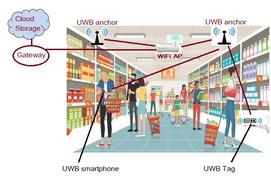
- The Anchors : These are small receivers installed in grid pattern on the warehouse ceiling. They create co-ordinate system (X, Y, Z ) for the assets of entire factory.
- The Tags : Battery powered UWB tags are attached with all the assets including pallets, forklifts, worker badges, movable machines etc. These UWB tags blink a radio pulse approximately every second.
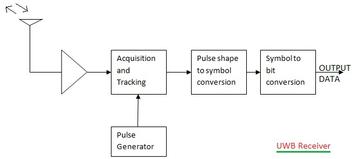
- ToF Calculation : The Anchors receive the pulse and system calculates Time of Flight (ToF) i.e. how long signal took to travel from tag to the anchors. The other method is, UWB anchors transmits pulse and measure reflections from the tags and calculate ToF.
- The system calculates the location of asset within few centimeters (10-30 cm).
- With the help of ERP sofware, managers can watch inventory of warehouse as it move in real time on a screen.
Case Study-1 (SEG Automotive)
The Challenge : The company SEG is a global supplier of starter motors used in cars. Their warehouse and factory were in separate buildings. They used ‘just in time’ manual picking process which was prone to manual error. They wanted to ensure that raw materials are delivered to the correct truck gate with high precision.
The UWB based Solution: They deployed high precision RTLS covering almost 2,000 square meters. The critical requirement was accuracy: they needed to track metal pallets to within 30 cm to ensure they were loaded onto the correct truck.
Results:
- Zero picking errors : The system guides workers to exact correct pallet and avoid any human mistakes.
- Digital visibility : ERP software is updated as and when materials move and does not wait for manual data entry.
- 50% fast lead times : The system removes manual search and scanning procedure and time to respond to orders dropped by half.
Case Study-2 (VELUX)
The Challenge : The company VELUX, is known for skylights. The company wanted to modernize its production site. They needed to track work in progress movement on AGVs (Automated Guided Vehicles) and optimize the environment for their skilled workers.
The UWB based Solution: They tagged both the AGVs and the workers. This created a dynamic interaction between machine and human.
Results:
- Automated Ergonomics: When an AGV arrived at a workstation, the UWB system identified which worker was there via their badge. The AGV automatically adjusted its height to match that specific worker’s ergonomic needs.
- 10% Productivity Boost: The smoother workflow reduced downtime.
- The tracking data revealed exactly how much distance each machine covered, allowing for smarter maintenance schedules based on actual usage.
Reference
- Microwave Journal eBook, November 2025
Advertisement