
What is Oxygen Sensor for SpO2 Measurement: Advantages and Disadvantages
Advertisement
An oxygen sensor for SpO2 measurement is an optical sensor used in pulse oximeters to estimate blood oxygen saturation non-invasively by analyzing red and infrared light absorption. It enables continuous health monitoring in hospitals, clinics, and wearable devices, although accuracy can be affected by motion, poor circulation, and ambient light.
Introduction
Oxygen sensors are versatile tools used in diverse fields.
Oxygen Sensors for Blood SpO2 Measurement
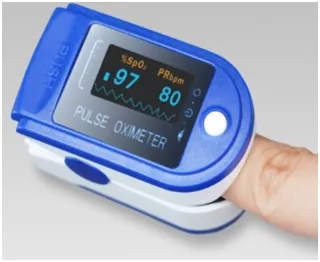
The oxygen sensor for SpO2 measurement typically consists of two LEDs (Red and Infrared) and a photodiode. These LEDs alternately transmit light, which is then detected by the photodiode if it is not absorbed by hemoglobin in the blood. The ratio of light received from the red LED and the infrared LED is used to calculate the oxygen percentage in the blood.
A healthy person usually exhibits an SpO2 range between 96% and 99%, though this can vary based on factors such as altitude.
Example: The Maxim MAX30100 is a popular choice used for both SpO2 and heart rate measurement.
Oxygen Sensors for Flue Gas O2 Measurement
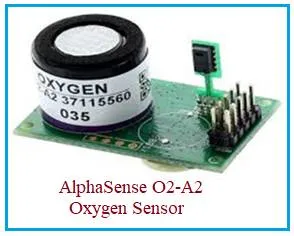
Oxygen sensors are also critical for measuring oxygen levels in exhaust gases produced by the combustion of fuel or coal in furnaces, boilers, or steam generators. These sensors rely on an electro-chemical process to determine the oxygen level in the gases.
Fresh air typically has an oxygen (O2) level of 21%. Combustion reduces this level, typically to between 8.5% and 10%.
Examples:
- AlphaSense O2-A2 model (Used in combustion analyzers)
- Model OXT-FLEX and OXY-GAP (Used for oxygen content measurement within flue or stack gases)
Benefits or Advantages of Oxygen Sensors
- Continuous Monitoring: They’re used in wearables to continuously monitor blood oxygen saturation.
- Alerting: They can alert users when oxygen levels drop below a critical threshold.
- Comfort for Patients: They provide significant comfort for patients with cardiovascular, respiratory, and other related diseases.
- Affordability and Features: Pulse oximeters with oxygen sensors are available at affordable prices and often include advanced features like data logging.
- Atmospheric Monitoring: Oxygen sensors are used to measure oxygen levels in the atmosphere, beyond just medical applications.
- Industrial Applications: They’re widely used in furnaces for oil, coal, and gas combustion due to their effective measurement capabilities.
- Performance: Oxygen sensors offer rapid response times and accurate measurements. They are also simple to design, easy to maintain, and convenient to use.
Drawbacks or Disadvantages of Oxygen Sensors
- Cost in Automotive Applications: Oxygen sensors for combustion engines in vehicles can be expensive.
- Accuracy Issues in SpO2 Measurement: Oxygen sensors for blood SpO2 measurements can provide inaccurate readings under certain conditions, including:
- Interference from external light
- Poor blood circulation or cold hands
- Lipids in blood plasma
- Pulse rate changes
- Carbon monoxide poisoning
- Electrochemical Sensor Limitations: Electrochemical process-based oxygen sensors require vasodilation and may offer poor accuracy.
Summary
An SpO2 oxygen sensor is an optical sensing device that measures blood oxygen saturation using red and infrared light. It enables fast, non-invasive, and continuous health monitoring. However, motion artifacts, poor peripheral circulation, and external light interference can reduce measurement accuracy.