
Explain RF Filter Selection : A Practical Guide Based on Specifications
Advertisement
RF filter selection is a critical engineering process that involves choosing the right filter based on specific electrical and mechanical specifications. A practical guide to selecting RF filters requires analyzing key parameters like center frequency, bandwidth, insertion loss, rejection levels, and power handling. Properly matching these specifications ensures minimal signal distortion and maximum interference rejection in wireless and microwave systems. Choosing the right RF filter is essential for effective signal management.
RF Filter Selection Guide
The following guidelines should be followed while selecting an RF filter as per your requirements:
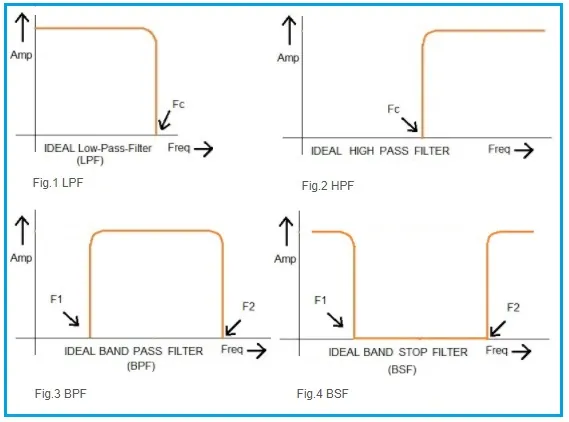
- Choose the type of filter required for the application: Bandpass, Bandstop, Lowpass, or Highpass.
- Choose electrical specifications (mentioned below).
- Choose mechanical specifications (mentioned below).
- Choose the filter type as per ripple requirements: Chebyshev, Butterworth, Bessel, Gaussian, etc.
- Choose the form of the filter: waveguide, dielectric resonator, microstrip, cavity, inter-digital, BAW (Bulk Acoustic Wave), SAW (Surface Acoustic Wave), LC, LTCC (Low Temperature Co-fired Ceramic), etc.
- Choose a popular vendor or manufacturer from Mini Circuits, StratEdge, Integrated Microwave, Synergy Microwave Corp., Bree Engineering, Wainwright Instruments GmbH, Lorch Microwave, Micro Lambda Wireless, Omniyig, etc.
Use the online RF filter search tool provided on the respective manufacturer’s website to easily find one as per desired specifications.
RF Filter Technical Specifications
The following are the electrical parameters to be considered in RF filter selection:
- Frequency Range of operation
- Passband insertion loss
- Out-of-Band Rejection
- Bandwidth
- Return Loss or VSWR
- Power Handling capacity
- Shape Factor or Selectivity
The following are the mechanical parameters to be considered:
- Physical Size
- Package type
- Type of connectors and position
Summary
Accurate RF filter selection based on strict performance specifications is the ultimate key to minimizing signal loss and maximizing system efficiency. By prioritizing metrics like bandwidth and insertion loss, engineers can successfully design robust, interference-free microwave circuits.