
What is Unmanned Spacecraft: Advantages and disadvantages of Space Probes
Advertisement
An unmanned spacecraft, also known as a space probe, is a robotic vehicle designed to explore space without carrying human occupants. Its advantages include lower mission risk and reduced operational costs, while its disadvantages include limited adaptability and dependence on remote communication and autonomous systems.
Introduction : An unmanned spacecraft is a spacecraft without a human crew onboard. These spacecrafts operate with varying degrees of human intervention, ranging from remote control to full autonomy. In autonomous mode, the spacecraft performs pre-programmed operations and transmits the results back to Earth. Due to their role in space exploration, unmanned spacecraft are often referred to as space probes.
Numerous unmanned spacecraft have been launched to explore our solar system, specifically to study Mars, Venus, and other celestial bodies orbiting Earth. Researchers aim to understand various aspects of these planets, including their potential to sustain human life.
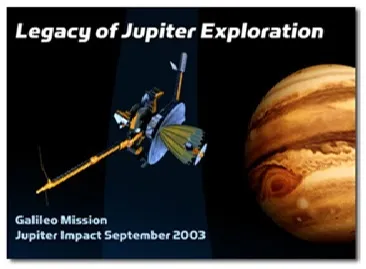
Figure 1: Galileo examining the atmospheric conditions of Jupiter. It also observed Jupiter’s moons.
Here are a few examples of unmanned spacecraft launched for space exploration:
- Lunar probe: LCROSS (launched by the US)
- Mars Probe: Phoenix (NASA lander), Mars Science Laboratory (NASA rover)
- Venus Probe: Magellan probe (US)
- Gas giant probe: Cassini-Huygens, Galileo probe (ended operations in 2003)
Benefits or Advantages of Unmanned Spacecraft or Space Probe
- Cost-effective: They are generally cheaper to build and operate than manned missions.
- Harsh Environment Tolerance: They can withstand harsh atmospheric conditions that humans cannot endure.
- Reduced Risk: They eliminate the risk of human injury or death.
- No Life Support Required: They don’t need to carry life support systems like food, oxygen, or water.
- Data Collection: They are highly effective at collecting data about temperature, water presence, magnetic fields, radiation, and other conditions in space.
Limitations or Disadvantages of Unmanned Spacecraft or Space Probe
- Remote Control Vulnerability: They can be vulnerable to unauthorized control due to their remote operation.
- Communication Delays: The vast distances in space result in significant delays in radio signal transmission between the spacecraft and Earth, which can slow down analysis.
- Limited Flexibility: They offer less flexibility in responding to unexpected situations compared to manned missions.
- Limited Maintenance: Maintenance options are limited, which can shorten their lifespan.
Summary
Unmanned spacecraft continue to expand scientific knowledge by enabling safe, cost effective exploration of planets, moons, asteroids and deep space environments.