
What is TCXO : Comparison, Advantages and Disadvantages
Advertisement
A Temperature Compensated Crystal Oscillator (TCXO) is a precision frequency source that minimizes frequency variation caused by temperature changes using electronic compensation techniques. Its advantages include excellent frequency stability, compact design, and low power consumption, whereas its disadvantages include higher cost, limited tuning range, and increased circuit complexity compared to standard crystal oscillators.
What is a TCXO?
TCXO stands for Temperature Compensated Crystal Oscillator. These oscillators are commonly used in communication devices because they can adjust the frequency based on changes in the surrounding temperature.
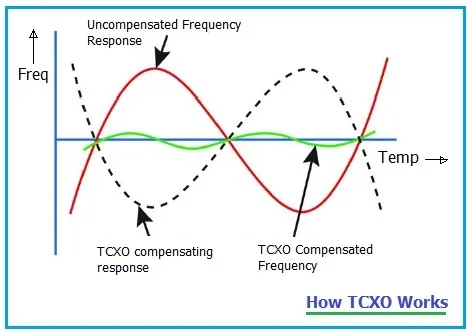
Figure 1, shown below, illustrates the working principle of a typical TCXO.
Benefits or Advantages of TCXO
- Superior Temperature Performance: TCXOs offer significantly better temperature stability compared to other crystal oscillators, typically by a factor of 10 to 40.
- Variety of Package Sizes: They are available in a wide range of package sizes to suit different application needs.
- Flexible Output Options: TCXOs can provide both clipped sine wave and standard sine wave outputs.
- Low Power Consumption: They generally operate with a 3V supply and draw a small current, often around 2 mA.
- Diverse Compensation Methods: TCXOs come in various types, utilizing analog, digital, or combined analog-digital compensation networks. Common types include ADTCXO, DTCXO, DCXO, and MCXO.
Drawbacks or Disadvantages of TCXO
- Cost: Achieving very high performance (e.g., +/- 1.5 ppm over a temperature range of 0°C to 70°C) increases the cost of the TCXO.
- Higher Power Dissipation: Compared to simpler oscillators, TCXOs consume more power due to the additional compensation circuitry.
- Stabilization Time: TCXOs require a certain amount of time to stabilize after being powered on, which can be 100 ms or longer.
Summary
TCXOs are extensively used in GPS receivers, wireless communication systems, instrumentation, and timing applications where stable frequency generation is essential. Their timing advantages improve synchronization and signal accuracy, while design complexity, production cost, and application-specific performance requirements should be evaluated during oscillator selection.